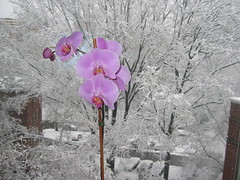
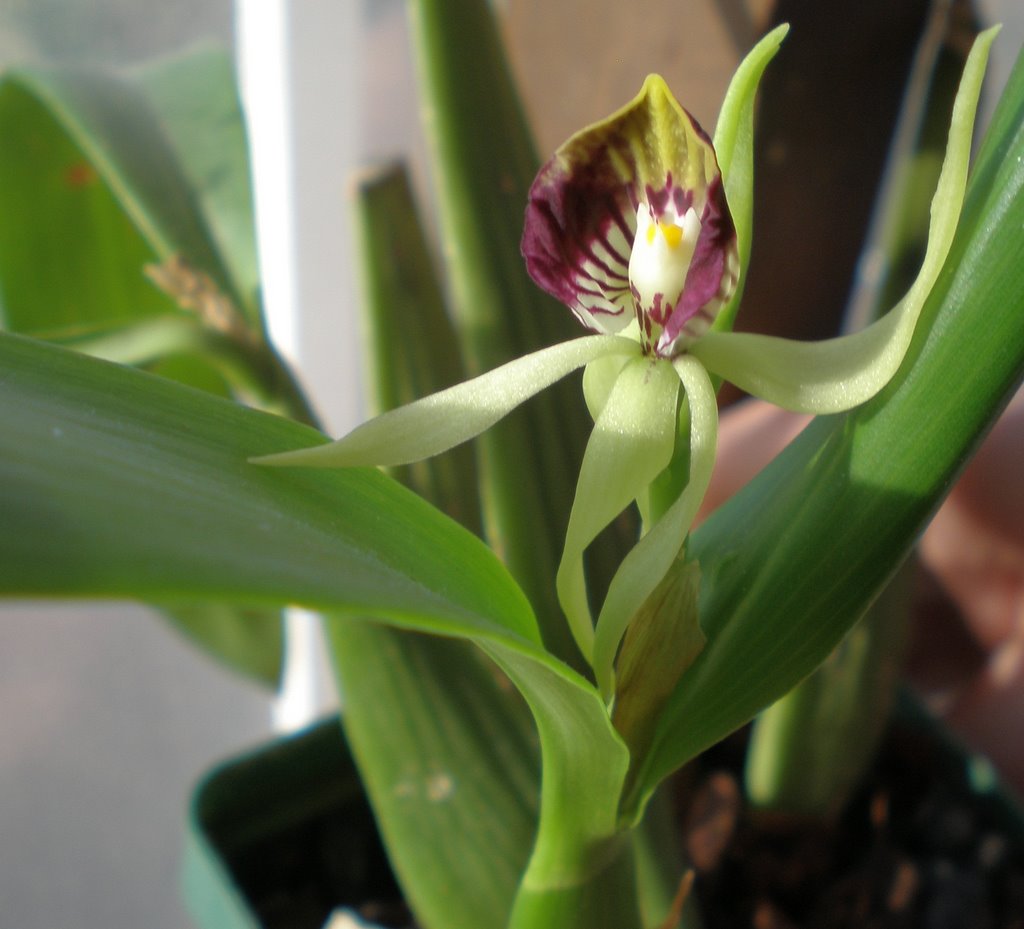
A little light never hurt an orchid, only a lot of light can
.
Lack of light is one of the main reasons orchids won’t flower in the home. Don’t believe what they tell you about light in the basic guidelines for growing orchids. Many orchids benefit from filtered, or even direct morning and evening sun. Different types of orchids require different light levels.
Vandopsis orchids can so
meti
mes be grown in nearly full sun, as can so
me kinds of
Cattleya. However, most orchids, even most
Cattleya’s will burn from too much, or mid-day sun.
This is not caused by the light as you might think, but by the building up of heat within the leaf. Just like freezing, too much heat can actually break apart the cells, causing damage to the leaf and in extre
me cases the entire plant.
Here is a list of suggested footcandle ranges for different orchids (see below for a definition of footcandles):

- Cattleya: 2,000-5,000 Footcandles
- Phalaenopsis: 1,000-2,000 Footcandles
- Oncidium: 1,000-3,000 Footcandles
- Dendrobium Phalaenopsis: High Light Levels
- Miltonias: 1,500-2,500 Footcandles
- Vandas: 4,000-5,000 Footcandles
- Paphiopedilums: 1,000-2,000 Footcandles
Several of these numbers were borrowed from the Orchids Limited website.
Generally, if the weather is not too hot then morning sun, or light during part of the day through an east, south, or west facing window can be very beneficial to orchids.
Light is necessary for orchids to flower. In fact,
light is one of the main reasons orchids won’t flower in the home. They may be growing just fine, but that doesn’t mean they’re getting enough light to flower. Flowering takes a lot of energy and orchids get their energy from light and water. That orchid may look great in the middle of the room, but it will most likely never flower. This is true of most orchids, but not always true of
Phalaenopsis and
Paphiopedilums, as well as
amazonica species and hybrids which can do well in normal household conditions in close proximity to a window. These orchids thrive in a range of light close to 1,000 lumens, which is what they’ll get next to an east or north facing window, or in a very bright room. However, they are especially low light orchids and cannot withstand direct sun on their leaves, with the exception of winter sunlight for a brief period in the far northern and southern latitudes.
Definition of Terms: Lumens, Footcandles Light is generally measured in Lumens, or Footcandles. A footcandle is the amount of light produced in comparison to candles at one foot away. Therefore, two candles from one foot distance will emit two footcandles of light, a normal fluorescent light bulb will produce a couple thousand. One lumen is the amount of footcandles distributed over a one square foot area. In general an object will receive about 10,000 footcandles in full sun, on a bright sunny day in the middle of summer.
On the other hand, the middle of a room on a dull grey day, with only one incandescent light fixture will probably receive only a couple hundred lumens. Far too little for almost any orchid to grow and flower. Generally 1,000 footcandles can be achieved in a bright north or west facing window. As well as in the middle of a brightly lit room, on a bright day. For higher levels of light, an east or south facing window, or artificial light will be necessary. Be careful to guard orchids from hot midday or early afternoon sun, by using a sheer curtain (one that still lets light through). Lumens and Footcandles are best measured with a light meter (often used by photographers).
 I will cover artificial lighting in a later posting. There are many options available to the light gardener, from High Pressure Sodium light fixtures to good old standard fluorescent lights.