Showing posts with label temperature. Show all posts

Sunday, December 3, 2006

Hot and Steamy: What You Need to Know about the Ups and Downs of Orchid Temperature

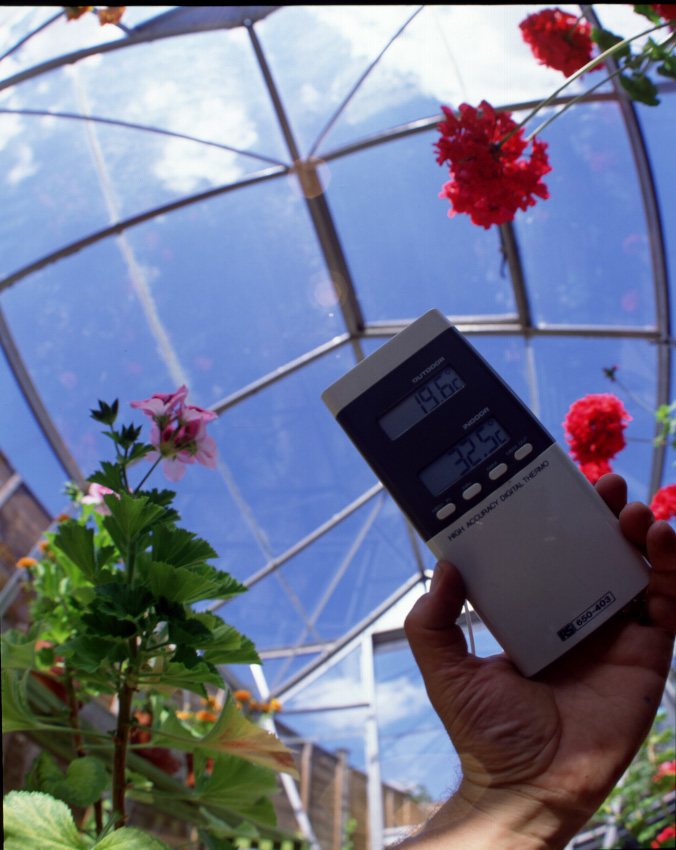
Photo Courtesy of Allen Black's Photo Site

Temperature can be one of the trickier points of keeping orchids. Usually it is better to choose plants that conform closely to the temperature conditions you already have. If you choose plants for looks, or interest and ignore temperature, you will most likely end up with orchids whose temperature needs directly conflict.

Most orchids require intermediate temperatures. This means daytime high temperatures in the low seventies to eighties and nighttime low temperatures between sixty and sixty-five degrees. Luckily, this is also the temperature range that most closely resembles household temperatures. Cattleyas, most Oncidiums, Ascocendas, most Paphiopedilums, Brassias, Miniature Cymbidiums and most Encyclias fall within the intermediate range, along with a number of other specific species and hybrids. The most commonly grown orchids in the cool range are large Cymbidiums, Odontoglossums and Zygopetlums (which can also be grown in cooler intermediate ranges). Cool growing orchids grow well with a nighttime low temperature of approximately fifty-five degrees and a daytime high of about sixty-five to seventy degrees. Warm growing orchids include Phalaenopsis and Vanda orchids. They like daytime temperatures of close to seventy-five to eighty degrees and nighttime low temperatures between sixty-five and seventy degrees.

Seedlings like to be kept warmer than full grown plants and should not be allowed to get as cold at night.

General Orchid Temperature Guidelines:

Cool Growing Orchids: High 65-70F Low 55-60F Zygopetalum, Cymbidium, Zygoneria, Ondontoglossum

Intermediate Growing Orchids: High 70-80F Low 60-65F Cattleya, Oncidium, Brassia, Encylcia, Cymbidium (miniature)

Warm Growing Orchids: High 75-85F Low 65-70F Phalaenopsis, Vanda, Cochleanthes Amazonica

For more information about temperature requirements for getting different types of orchids to flower, check out my post Getting the Right Temperature Change for Orchids to Bloom.

Sunday, November 26, 2006

Getting the Right Temperature Change for Orchids to Bloom

Image courtesy of DHD Multimedia Gallery

If you want your orchids to flower, you must find a way to raise the temperature by ten to twenty degrees between nighttime and daytime. Orchids can grow fine with less temperature change, but in order to initiate flower buds, they need a large temperature variation. This is one of the main reasons orchids don’t bloom in the home. In a greenhouse and outside this change is no problem, but to reproduce it in the home certain measures must be taken to ensure that your orchids get the temperatures they need. Here are five steps you can do to get a proper day and night variation in temperature.

  1. Place the orchids somewhere in the house that naturally gets a major temperature variation, such as an enclosed porch or sunroom.
  2. Move the orchids close to a window, or into the basement overnight to achieve a greater temperature variation.
  3. Set the thermostat to get a couple degrees warmer than you’re comfortable with during the day, such as 75 degrees and a couple degrees cooler than you’re comfortable with at night, such as 65 degrees. This will establish the absolute minimum temperature variation orchids need.
  4. Place the orchids outside for the summer, in a shaded area. Outside your orchids will have no trouble getting the temperature variation they need.
  5. In general a room is warmer near the ceiling than near the floor. You can place orchids further up in the room, such as on high shelves during the day and then move them close to the floor at night. This can also be the case for upstairs and downstairs. If you grow under lights, place the orchids that need warmer temperatures near the lights and the cooler one’s further away and then move them at night.

Tomorrow I will cover the basics of artificial light. Light gardening is a new and viable option for those of us in the dark north, or in a small space with few windows.

Also check back for the ideal temperature ranges for different orchids.